

Defense Industry Outlines “To-Do List” for South Korean Nuclear Submarine Program
A closer look at what South Korea’s defense contractors say they need to make SSN's a reality
On December 8, 2025, South Korea’s Institute for National Security Strategy (INSS) and the ruling Democratic Party hosted a policy forum in Seoul, titled, Policy Direction for Nuclear Submarine Acquisition. The event convened representatives from the nation’s defense primes, namely Hanwha Ocean, Hanwha Systems, HD Hyundai Heavy Industries, Doosan Enerbility, and LIG Nex1, to help define the industrial requirements for South Korea’s nuclear submarine (SSN) program.
Key Industry Recommendations
The consensus from South Korea’s defense industrial base is clear: the SSN program is not just an ordinary procurement contract, but a multi-decade national undertaking requiring massive infrastructure investment and legal restructuring. The industry signaled it is ready to proceed but will not commit capital without explicit government guarantees and regulatory reform.
Please note that the recommendations described below are paraphrased from statements made by individual industry representatives. Based on local media reports, these recommendations do not appear to have been jointly coordinated.
Create a National Roadmap
Industry representatives argued that without a government commitment spanning the vessel’s full lifecycle of 30 to 40 years, industry cannot justify the necessary capital expenditures (CAPEX).Lifecycle Planning: The government must publish a comprehensive roadmap covering the entire lifecycle from design and construction to maintenance and decommissioning.
Risk Mitigation: The plan must include financial safeguards to protect companies from risk exposures inherent in a program of this duration and complexity.
Control Tower: A “Nuclear Submarine Project Team” must be established with cabinet-level authority and presidential backing. Industry stressed that a standard acquisition office lacks the power to coordinate across ministries and overcome bureaucratic inertia.
The “2026 Cliff”
Regulatory and Diplomatic Urgency The industry set a stark deadline: If the government cannot finalize basic designs for the SSN program’s three key pillars (i.e. fuel, reactor, hull) by the end of 2026, the mid-2030s deployment target is impossible.Diplomatic Hurdles: The government must immediately begin negotiations with the International Atomic Energy Agency (IAEA), the US Nuclear Suppliers Group, and the US Department of Energy (DOE) regarding uranium enrichment levels, small modular reactor (SMR) replacement cycles, and spent fuel protocols.
Domestic Legal Reform: South Korea’s existing laws are designed for commercial safety, not military agility. Defense contractors demanded special legislation to exempt the program from commercial bottlenecks, warning that current regulations would stall development at every stage.
Massive Infrastructure Investment Required
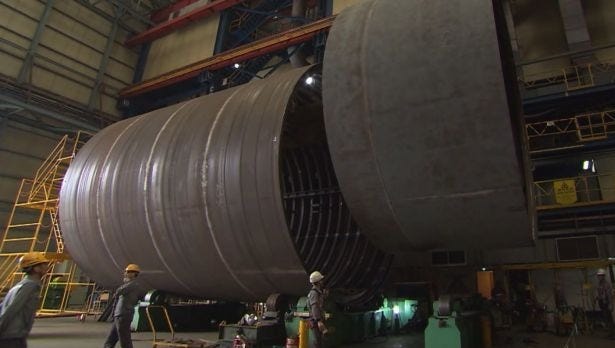
Facility Gap: Existing shipyards are optimized for 3,000-ton conventional submarines (e.g. KSS-3). SSN likely hovering around 5,000 tons would require larger pressure hull facilities and heavier lift capacities.
Nuclear Specifics: Construction requires new, specialized infrastructure, including radiation shielding, secure nuclear fuel handling facilities, and remote precision installation equipment that does not currently exist in domestic yards.
Global Integration to Sustain the SSN Ecosystem
A representative from Hanwha proposed that South Korea should integrate into the global nuclear supply chain.The Strategy: Recognizing that domestic demand (i.e. Republic of Korea Navy) alone will present limitations in sustaining a dedicated SSN industrial base, Hanwha suggested producing modules and subsystems for “allied” SSN programs while building complete hulls for South Korea. This “dual-track” approach would maintain production volume and technical expertise.
Conclusion
The forum delivered a unified message: The clock is ticking. The South Korean defense industry needs the government to immediately construct the legal, regulatory, and financial frameworks to support them. Without these foundations, the private sector views the project as too risky to proceed. And, the longer this uncertainty persists, the later South Korean SSN’s will go to sea…if at all.
[For a deeper dive into South Korea’s nuclear submarine program, visit Polemos Insights]
Sources
https://www.hankyung.com/article/2025120810151
https://www.hankyung.com/article/202512080945i
https://www.yna.co.kr/view/AKR20251207027600504?input=1195m