

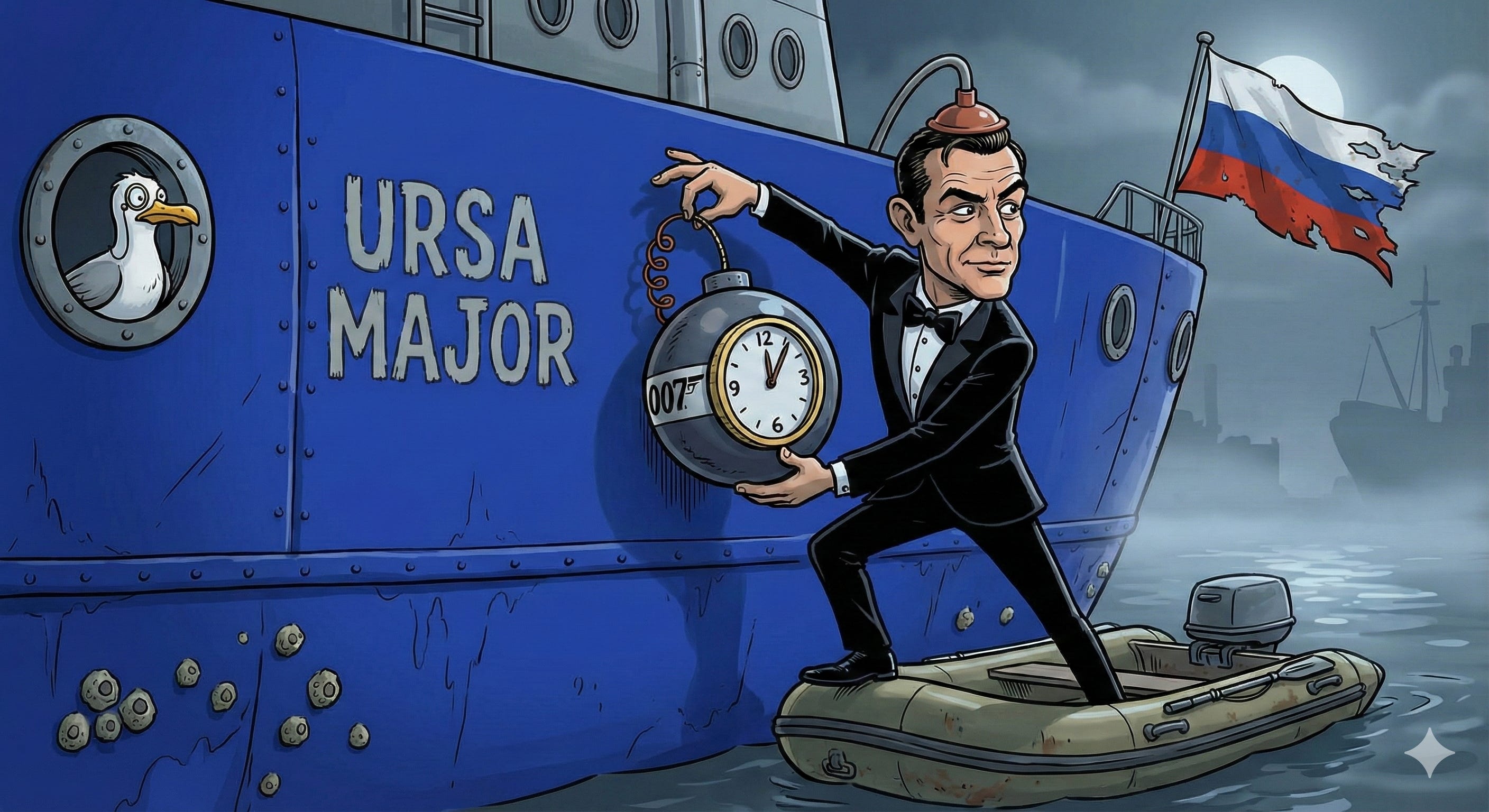
On December 28, Spanish media reported that a Russian cargo ship which sank off the Spanish coast in December 2024 was reportedly carrying nuclear contraband headed for the North Korean port city of Rason. The cargo onboard: reactor containment components of the Soviet-era VM-4SG—the final iteration of the VM series that powered Soviet ballistic missile submarines through the Cold War.
This revelation comes just days after the Kim Jong Un regime’s latest SSBN photo op, leaving observers to question the degree of Russian assistance behind Pyongyang’s nuclear submarine program. I covered the design limitations revealed in those photos in my previous analysis.
For the time being, however, the reactor powering Kim’s SSBN may bear limited Russian fingerprints.
In a recent media interview, CAPT Choi Il (Ret.) offered his expert assessment on this question. CAPT Choi is among the most highly respected submariners in the South Korean submarine community, and is likely quite familiar with the underwater affairs of both Moscow and Pyongyang. Below are the key takeaways from his interview:
Technical constraints: Mounting a secondhand Russian reactor into a new hull is “almost impossible”
Political limitations: Moscow is not in a position to openly back Kim’s construction of a ballistic missile submarine
Timeline inconsistency: Kim’s submarine design and construction likely predates Russia’s February 2022 invasion of Ukraine, making it inconsistent with theories that reactor transfer was compensation for wartime munitions support
Limited assistance possible: Russia may have provided technical know-how or expert manpower, but the reactor itself should be viewed as a North Korean product.
One final note: the circumstances of the Ursa Major‘s sinking remain suspicious. Three explosions and a 20-inch hole with inward-bent edges suggest external detonation. Whether this was sabotage, and by whom, remains officially unanswered.