

Poland's Submarine Gamble
In November 2025, Poland selected Sweden's unproven A26 submarine over proven alternatives from Germany and South Korea, raising a series of questions
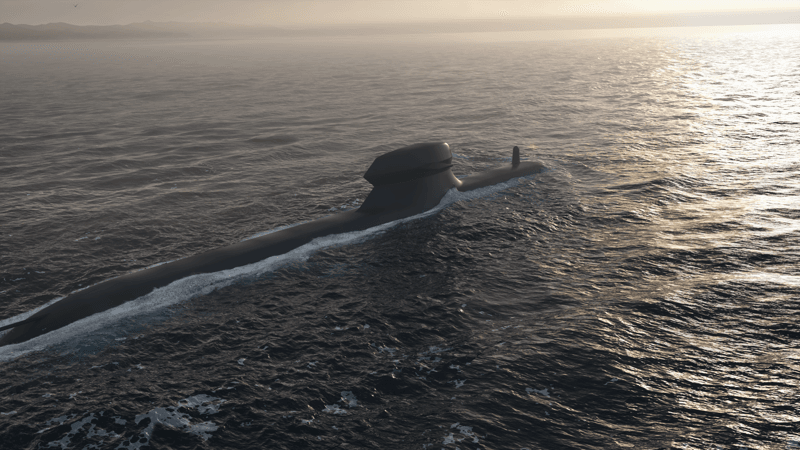
In November 2025, Poland opted to procure Saab Kockums’ A26 submarine over proven platforms from the likes of Germany and South Korea. Stakeholder reaction to this decision hasn’t been entirely positive, and rightfully so.
The A26 is an immature design that has never been built, and work will be done at a shipyard that hasn’t constructed a new submarine in almost 30 years. Meanwhile, Poland rejected proven alternatives from ThyssenKrupp Marine Systems (TKMS) and Hanwha Ocean, which offered submarine designs already in service with multiple navies and backed by shipyards that rank among the world’s best in terms of both submarine design and construction.
In this article, I take a deep-dive into why the A26 selection would be characterized by Sir Humphrey Appleby as a “courageous” decision.
The A26’s Troubling Track Record
Saab Kockums’ last new submarine delivery occurred in 1997, when HSwMS Halland, the final Gotland-class boat, entered service with Sweden’s navy. Since then, the shipyard has conducted maintenance and mid-life upgrades on the Gotland class, but has not built a new submarine in nearly three decades. The workforce that built those boats has aged, and institutional knowledge transfer remains uncertain after such an extended construction gap.
The A26 program itself tells a cautionary tale. Sweden ordered two units in 2015, with original delivery dates of 2024 and 2025. Following a contract renegotiation in October 2025, delivery dates were pushed to 2031 and 2033. Even more concerning, costs have more than doubled from the original contract value of approximately EUR 1.2 billion to EUR 2.3 billion for just these two boats.
Against this backdrop, Poland’s expectation of receiving its first A26 in 2030 ahead of Sweden’s own boats may be a bit optimistic.
The Perils of Developmental Submarines
When TKMS brought the Type 214 design to market in the early 2000’s, it represented the company’s first attempt at an AIP-equipped export submarine design. The Type 214 was developmental, as it was a new design that had never before been built.
As the first two customers, Greece and South Korea discovered the costs of being early adopters of an unproven design. The problems were not construction defects but were known to be fundamental design issues inherent to a first-of-class submarine designed with a high degree of technological ambition.
Greece
The lead boat, HS Papanikolis, launched in 2004, encountered comprehensive failures during sea trials. The submarine suffered from severe stability problems—listing up to 46 degrees in rough seas—requiring structural redesign and 21 tons of reinforcement. The AIP fuel cells overheated and underperformed. Propeller cavitation created excessive noise. Periscopes vibrated. Sonar arrays malfunctioned. Seawater leaked into hydraulic systems.
Greece refused delivery. The submarine underwent years of remediation and was not accepted until November 2010—six years after launch. A former Republic of Korea Navy (ROKN) quality control supervisor stationed at TKMS during this period later wrote that “the essence of the problem was not a simple design flaw, but reckless haste that attempted to field an unfinished technology as an operational weapon system.”
South Korea
The ROKN’s lead submarine, ROKS Son Won-il, was delivered in December 2007. Within months, severe propulsion noise problems emerged. The submarine was decommissioned in 2010 and sent to Germany for extensive repairs which kept it out of service until 2014. During South Korea’s 2015 National Assembly testimony, it was reportedly revealed the submarine’s noise levels noticeably exceeded specifications, which was considered a catastrophic failure for a platform whose primary defense is stealth.
Problems extended across the entire class. In 2022, inspections revealed all nine South Korean Type 214’s suffered from defective inverter modules, critical propulsion system components supplied by Siemens. These were not isolated quality control failures but systematic problems stemming from immature technology and design compromises inherent to a developmental platform.
The Greek and South Korean experiences share a common thread: both nations served as test beds for unproven technology. The delays weren’t measured in months but in years, and the costs mounted as these submarines sat pierside or underwent remediation instead of conducting operations.
The Proven Alternatives Poland Walked Away From
TKMS’ Type 212CD evolves from the Type 212A, which has been operational since 2003. Type 212CD benefits from continuous development and production expertise at TKMS. Germany and Norway have each ordered six boats, creating a production run that spreads development costs and ensures sustained yard capacity. The hydrogen fuel cell air-independent propulsion (AIP) system is a mature, proven technology, while the rest of the boat incorporates decades of incremental improvements in stealth, automation, and combat systems.
Meanwhile, Hanwha’s KSS-3 boats have also been in service with the ROKN, patrolling East Asia’s increasingly volatile waters, demonstrating the design’s maturity and the builder’s execution capability. At 3,600 tons displacement, the KSS-3 is larger than the 2,000-ton A26, enabling longer endurance (i.e. 3+ weeks submerged), more weapons capacity, and potential for future capability growth, such as deep-strike capabilities against Russia that Poland had reportedly desired.
The “Baltic-Optimized” Justification Doesn’t Hold
Proponents of the A26 selection emphasize that the design is specifically tailored for Baltic Sea operations (e.g. shallow waters, complex acoustic environments, littoral environment). This may be true. However, this argument may insinuate that the alternatives are somehow inadequate for Baltic operations, which is a questionable claim, especially when it comes to the Type 212CD.
Germany’s Type 212 series was designed precisely for shallow-water operations in the Baltic and Mediterranean. These submarines have been operating in such environments for the German Navy. While larger, the KSS-3 strikes a balance between a shallow-water hunter-killer and a deep-strike threat against Russia via the South Korean submarine’s vertical launch system (VLS) cells capable of accommodating ballistic and cruise missiles.
“Optimized for the Baltic” is by no means a compelling rationale, especially when weighed against the A26’s construction and delivery timeline risks.
The Stakes for NATO’s Eastern Flank
The Baltic Sea is arguably NATO’s most vulnerable flank, bordered by Russia’s Kaliningrad enclave with its substantial naval presence. Alongside other NATO allies, Poland intended to play its part in collective defense by bolstering its submarine force. Instead, it chose a submarine that has never been built, betting on optimistic timelines that developmental submarine programs rarely achieve.